

An industrial coffee roaster TCO analysis goes far beyond the initial purchase price. Energy consumption, effective production capacity, maintenance, downtime, automation, technical support and equipment lifetime all influence the real cost of producing coffee over time.
A meaningful comparison should therefore go beyond CAPEX and ask a more useful question: how much does it cost to reliably produce one tonne of coffee throughout the operating life of the equipment?
PURCHASE PRICE IS ONLY THE BEGINNING
CAPEX + ENERGY + MAINTENANCE + DOWNTIME + SERVICE + LIFETIME
REAL COST PER TONNE
The relevant question is not only how much an industrial coffee roaster costs, but how much it costs to reliably produce one tonne of coffee throughout its operating life.
What is Industrial Coffee Roaster TCO?
Total Cost of Ownership, or TCO, is a lifecycle approach to evaluating an industrial asset. It considers not only the initial investment, but also the operating, maintenance and availability costs accumulated while the equipment is in service.
For an industrial coffee roaster, TCO should include the cost of purchasing and installing the machine, the energy required to roast and cool the coffee, preventive and corrective maintenance, spare parts, production losses caused by downtime, operating requirements and the residual value of the equipment at the end of the evaluation period.
The objective is not to predict every future expense with absolute precision. It is to compare alternatives using the same assumptions and identify which engineering decisions will have the greatest economic impact over the complete lifecycle.
TCO
INITIAL INVESTMENT + ENERGY + MAINTENANCE + SPARE PARTS + DOWNTIME − RESIDUAL VALUE
TCO ÷ LIFETIME PRODUCTION = COST PER TONNE
Always compare the same evaluation period, production hours, energy price, auxiliary-equipment scope and residual-value criterion.
CAPEX: the visible part of the investment
Capital investment is the most visible component of an industrial coffee roasting project, but it must be defined consistently before proposals can be compared. The price of the roaster alone may not include the same scope of supply from one manufacturer to another.
A complete CAPEX comparison may need to include the roaster, cooling system, green and roasted coffee handling, storage, emissions-control or afterburning equipment, automation, installation, commissioning, civil works, utilities and operator training.
A lower initial quotation may become less attractive if it excludes essential equipment, integration work or commissioning services. The correct question is not simply which machine has the lowest price, but which complete solution can achieve the required production, quality and availability with a clearly defined project scope.
CAPEX remains important because it affects financing and cash flow. However, once the plant starts producing, recurring costs and production performance begin to determine the economics of every tonne.
COMPARE EQUIVALENT SCOPE, NOT ONLY THE MACHINE PRICE.
Discover our complete industrial coffee installations.
Energy consumption
Measure energy per tonne, not installed power
Coffee roasting is an industrial thermal process, so energy consumption has a direct and recurring impact on operating costs. However, comparing only the rated power of the burners does not describe the real energy performance of a roasting system.
Maximum burner power indicates the available thermal capacity. It is not the amount of gas consumed during a batch or the energy used to process one tonne of green coffee. The same distinction applies to installed electrical power and actual electrical consumption during production.
For a meaningful comparison, energy data must be related to effective production under defined operating conditions. Gas consumption per batch and per tonne, together with electrical consumption per operating hour and per tonne, are more useful indicators than nominal nameplate power.
MAXIMUM BURNER POWER ≠ ACTUAL ENERGY CONSUMPTION
TNA-300 · Reference operating data
A practical example shows why production and energy data should be expressed per unit produced. The following figures describe a TecAIRE TNA-300 under reference operating conditions.
300 KG
Nominal batch
1,500 KG/H
Reference production
20–23 NM³/T
Natural gas per tonne
≈ 20%
Saving with air recirculation
5 BATCHES/H · ≈ 12 MIN/BATCH · 872 KW MAX. · 6–7 NM³/BATCH · 55 KW INSTALLED · 24 KWH/H · ≈ 16 KWH/T
At the reference production rate, five 300 kg batches are processed per hour, corresponding to an average production cycle of approximately 12 minutes per batch. The roaster is equipped with a burner with a maximum rated power of 872 kW, while reference natural-gas consumption is approximately 6–7 Nm³ per batch, equivalent to around 20–23 Nm³ per tonne of green coffee processed.
Installed electrical power is approximately 55 kW, while typical electrical consumption during production is around 24 kWh per operating hour. At an output of 1.5 tonnes per hour, this is equivalent to approximately 16 kWh of electricity per tonne processed.
TecAIRE’s air-recirculation system can reduce energy consumption by approximately 20%, demonstrating how process design can influence operating costs throughout the equipment’s useful life.
Technical note: Reference operating data. Actual production and energy consumption may vary depending on coffee characteristics, roast profile, operating conditions, machine configuration, auxiliary equipment and the basis used to measure energy consumption. These figures should be understood as reference values and not as guaranteed consumption.
Production + Reliability + Maintenance
Effective production capacity
Two industrial coffee roasters with the same nominal batch capacity do not necessarily produce the same number of tonnes per day. Loading, roasting, discharge, cooling and preparation for the next batch all influence effective output. The roast profile and coffee characteristics can also alter cycle time. For this reason, effective kg/h or tonnes/h under defined conditions are more relevant than nominal batch size alone.
Reliability and production availability
Production that exists only on paper creates no value. Unplanned downtime reduces annual output, interrupts downstream operations and can increase labour, energy and delivery costs. Reliability should therefore be evaluated together with realistic operating hours, planned maintenance and the availability of technical support and spare parts.
Preventive maintenance throughout the lifecycle
Every industrial roasting system requires maintenance, but the tasks should be predictable, accessible and integrated into the plant’s operating strategy. Typical preventive routines include daily removal of coffee dust and deposits, weekly inspection and cleaning of ducts, monthly lubrication of moving components and burner checks, together with an annual general inspection of the roasting system.
Good access to components and planned service intervals help protect availability and make maintenance costs easier to manage. Correct maintenance also supports roast consistency, operational safety and a longer useful life.
BUILT FOR THE LONG TERM
1979 → 2026
TecAIRE TTA-100 · Tunisia · BGH family
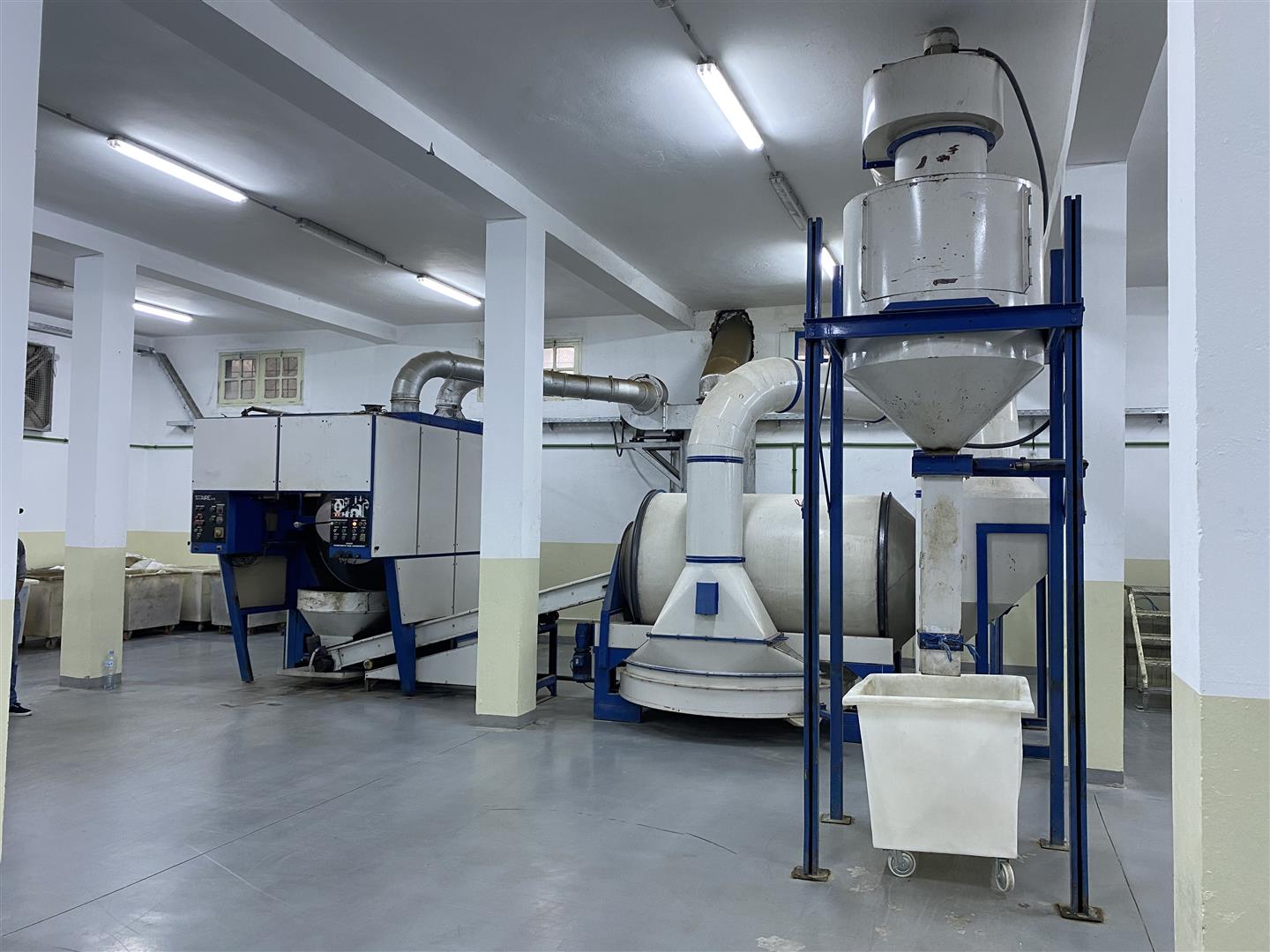
The useful life of industrial equipment can have a significant impact on its Total Cost of Ownership. The longer a machine remains productive, maintainable and technically supported, the greater the number of tonnes over which the original investment is distributed.
For TecAIRE, this is not only a theoretical consideration. A TTA-100 industrial coffee roaster installed in Tunisia in 1979 for the BGH family remains in operation today.
More than four decades of operating life demonstrate why durability, maintainability, spare-parts support and the ability to upgrade equipment should be considered when evaluating the economics of an industrial coffee roaster.
The purchase price is paid once. The consequences of the engineering and construction decisions behind the machine remain for decades.
Automation and consistency
RECIPES · CURVES · TEMPERATURES · BATCHES · ALARMS · HISTORIES · DATA · REMOTE ACCESS
Coffee plant automation is not an accessory when repeatability, traceability and production control are part of the operating objective. A modern roast-control system should help operators reproduce recipes, follow roast curves, monitor temperatures, record batches, manage alarms and review production histories.
Data makes deviations visible and supports continuous improvement. It can help production teams compare batches, investigate quality variations and understand how operating conditions affect output and energy use. Remote access can also enable faster diagnosis and reduce the time required to resolve certain service issues.
Automation does not replace process knowledge or trained operators. It provides a consistent framework in which that knowledge can be applied, recorded and improved across shifts, products and production campaigns.
Serviceability and plant evolution
MAINTAIN → REPAIR → UPGRADE → INTEGRATE → EXPAND
An industrial coffee plant rarely remains unchanged for ten, twenty or thirty years. Production volumes increase, product ranges evolve, automation requirements become more demanding and new equipment must be connected to existing lines.
Serviceability therefore means more than carrying out routine maintenance. It includes access to components, clear technical documentation, spare-parts availability, diagnostic support and the ability to repair or upgrade systems without unnecessarily replacing the complete asset.
A machine designed around its lifecycle must also be capable of integration. Changes in conveying, storage, cooling, grinding, emissions control or plant automation may require the roasting system to exchange data and operate as part of a broader production architecture.
The ability to maintain, repair, upgrade, integrate and expand a plant can protect the original investment and reduce the cost and disruption associated with future changes.
Discover complete industrial coffee installations and TecAIRE technical support services.
€/TONNE
MACHINE A · €X
CAPEX · energy · production · maintenance · availability · lifetime
MACHINE B · €Y
CAPEX · energy · production · maintenance · availability · lifetime
TOTAL LIFETIME COST ÷ TONNES RELIABLY PRODUCED = COST PER TONNE
A lower purchase price does not necessarily create a lower production cost. A machine with lower CAPEX may consume more energy, produce fewer effective tonnes per hour, require more unplanned interventions or have a shorter economically useful life.
Conversely, a higher initial investment may be distributed across a greater volume of reliable lifetime production. The comparison should use the same operating period, production programme, energy prices, maintenance assumptions, availability targets and scope of supply for every alternative.
THE LOWEST CAPEX DOES NOT AUTOMATICALLY MEAN THE LOWEST €/TONNE.
What should you consider before buying an industrial coffee roaster?
Before comparing quotations, define the production outcome and lifecycle assumptions that every supplier must address. The following checklist helps move the conversation from nominal specifications to long-term operating value.
Performance
• Effective production in kg/h under defined conditions.
• Expected annual production and operating hours.
• Complete cycle duration and cooling time.
• Gas consumption per batch and per tonne.
• Electrical consumption per hour and per tonne.
• Roast-profile consistency.
• Automation, recording and traceability capabilities.
Lifecycle
• Complete scope of supply and commissioning.
• Accessibility for preventive maintenance.
• Availability of components and spare parts.
• Technical service and response times.
• Remote-diagnosis capability.
• Upgrade and integration capability.
• Expected useful life and residual value.
The objective is to select an industrial roasting system capable of delivering the required production, quality and risk level throughout its operating life, not simply the lowest initial quotation.
Frequently asked questions
How much does an industrial coffee roaster cost?
The price of an industrial coffee roaster depends on capacity, process type, automation, cooling and emissions-treatment systems, auxiliary equipment, and the scope of installation and commissioning. To compare quotations correctly, an equivalent scope must be defined and energy, maintenance, downtime and service costs over the useful life must also be evaluated.
How is industrial coffee roaster Total Cost of Ownership calculated?
TCO is calculated by adding the initial investment, energy, maintenance, spare parts, downtime and operating costs over the evaluation period, then subtracting residual value. Dividing the total cost by the tonnes reliably produced over the useful life gives a cost of ownership per tonne.
How much energy does an industrial coffee roaster consume?
Consumption depends on the coffee, roast profile, effective output, equipment configuration and auxiliary systems. Maximum burner power is not the same as actual consumption. Equipment should be compared using data such as Nm³ of gas per batch or per tonne and electrical kWh per operating hour or per tonne.
Why is effective output more important than nominal batch capacity?
Two machines with the same nominal batch capacity may complete a different number of cycles per hour. Loading, roasting, discharge, cooling and preparation for the next batch determine effective output in kg/h and therefore the number of tonnes the plant can produce each year.
How do maintenance and downtime affect cost per tonne?
Planned preventive maintenance helps protect availability and reduce unplanned interventions. Unscheduled downtime lowers annual output and can increase labour, energy, delivery and service costs. Component accessibility, spare parts and technical support are all part of TCO.
Does the lowest purchase price guarantee the lowest cost per tonne?
No. A machine with lower CAPEX may consume more energy, produce fewer effective tonnes, require more interventions or have a shorter useful life. The comparison must be based on total lifetime cost divided by the tonnes reliably produced.
Engineering for the complete lifecycle
ROASTING · COOLING · STORAGE · CONVEYING · GRINDING · AUTOMATION · INTEGRATION
TecAIRE’s approach to industrial coffee plant engineering considers roasting as part of a complete production process.. Roasting, cooling, storage, pneumatic conveying, grinding, automation and plant integration all influence the performance and economics of an industrial coffee-processing installation.
For this reason, evaluating an industrial coffee roaster must go beyond its purchase price. A useful investment question is not simply “How much does the machine cost?”, but “How much will it cost to reliably produce one tonne of coffee with it throughout its operating life?”
That is the difference between evaluating the price of a machine and evaluating the long-term value of an industrial production asset.
Discover TecAIRE industrial coffee roasters and our complete industrial coffee installations.
Sources and technical notes
TNA-300 operating data
Internal TecAIRE engineering and operating data, reviewed by David Cabré. The figures shown are reference values and may vary depending on the coffee, roast profile, equipment configuration, auxiliary equipment and operating conditions.
Calculations per tonne
Calculated from TecAIRE reference operating data. For example, an electrical consumption of 24 kWh per operating hour at a production rate of 1.5 t/h is equivalent to approximately 16 kWh/t.
Historical TTA-100 reference
TecAIRE historical archive and technical records. Equipment installed in Tunisia in 1979.
Lifecycle asset-management methodology
Lifecycle costs
Note on sources
The external references support the general lifecycle-evaluation approach. The numerical TNA-300 data and the historical TTA-100 reference come from internal TecAIRE sources.
Planning an industrial coffee roasting project?
